 Help & Support
 SEARCH
Chrome revolutionizes browsing with a seamless AI Split Screen update
SHARE IT
Google announces a transformative update to the AI Mode within Chrome. The tech giant is taking a bold step to address one of the most persistent frustrations users have faced. By introducing an entirely new layout and deeper integration, the company aims to redefine how we search, consume, and interact with information on the internet. This upgrade marks a crucial evolution from a simple search portal into a deeply interactive productivity environment.
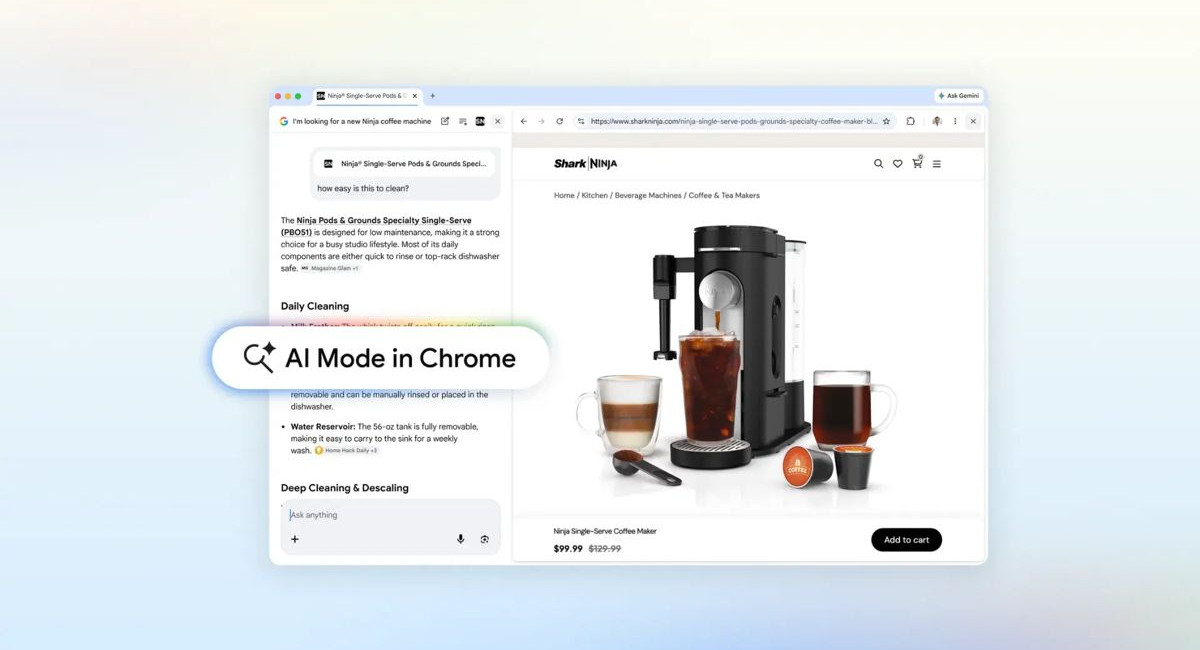
At the heart of this major overhaul is a highly requested interface redesign that completely eliminates the friction of jumping between artificial intelligence conversations and actual web pages. Previously, whenever an individual clicked a link provided by the digital assistant, the browser would navigate away from the chat, abruptly cutting off the thread of inquiry. Now, selecting a source link opens the target destination in a convenient split screen view right next to the active conversation. This dual pane strategy ensures that researchers, students, and casual browsers alike can seamlessly transition between reading external source materials and continuing their dialogue without losing their train of thought.
What truly sets this update apart is the advanced contextual awareness the system now possesses. The digital assistant does not just sit idly beside the web page; it actively analyzes and comprehends the content displayed in the adjacent window. This means users can ask highly specific, granular questions about the exact article, product, or document they are viewing. For example, a user browsing a consumer electronics page can simply ask the assistant if the device is easy to clean. The system will instantly digest the information on that specific page, cross reference it with its vast external knowledge base, and provide a highly synthesized, accurate response in real time.
To further empower the user experience, Google has integrated a brand new plus menu directly into the primary search interface. This addition drastically expands the types of information users can feed into the system. Instead of relying solely on text based prompts, individuals can now bundle an array of elements into a single query. By attaching recently opened tabs, local documents, and various images, users provide the system with an incredibly rich tapestry of context. This capability ensures that the generated answers are highly tailored, relevant, and specific to the complex needs of the individual.
Beyond simple text generation and reading comprehension, this newly introduced plus menu acts as a centralized gateway to Google broader suite of creative applications. Users will now have immediate access to features like Canvas and advanced image generation directly from the search box. By weaving these tools into the very fabric of the browser, the company is ensuring that Chrome remains a one stop destination for both information retrieval and content creation, solidifying its dominance in a highly competitive market.
The journey toward this polished interface has certainly had its share of turbulence. When the company first embarked on its aggressive generative artificial intelligence rollout last September, the initial offerings were met with significant user resistance. Early iterations, particularly the automated overviews that dominated the top of standard search results, were heavily criticized for presenting inconsistent, confusing, and sometimes entirely inaccurate information. The dissatisfaction was palpable, leading a substantial number of users to actively seek out complicated workarounds just to disable the functionalities entirely.
Taking that harsh feedback into account, the engineering teams have clearly worked to refine both the underlying language models and the overall user interface. The transition from a static, obtrusive block of text to a dedicated, conversational window represents a mature understanding of user experience design. The system is now significantly more accurate and, crucially, much less intrusive. It respects the user workspace, offering assistance in a dedicated zone rather than forcing itself over traditional search results.
This overarching strategy is not confined to desktop computers. The company has been steadily expanding these intelligent capabilities to the mobile ecosystem, bringing dedicated shortcuts and features to both iOS and Android platforms. As of right now, this massive split screen upgrade is steadily rolling out to users across the United States. However, the company has confirmed that a broader, global expansion is already in the pipeline, promising to bring this streamlined, next generation browsing experience to the rest of the world very soon.
MORE NEWS FOR YOU