 Help & Support
 SEARCH
Google AI forecasting pioneer promises unprecedented meteorological precision
SHARE IT
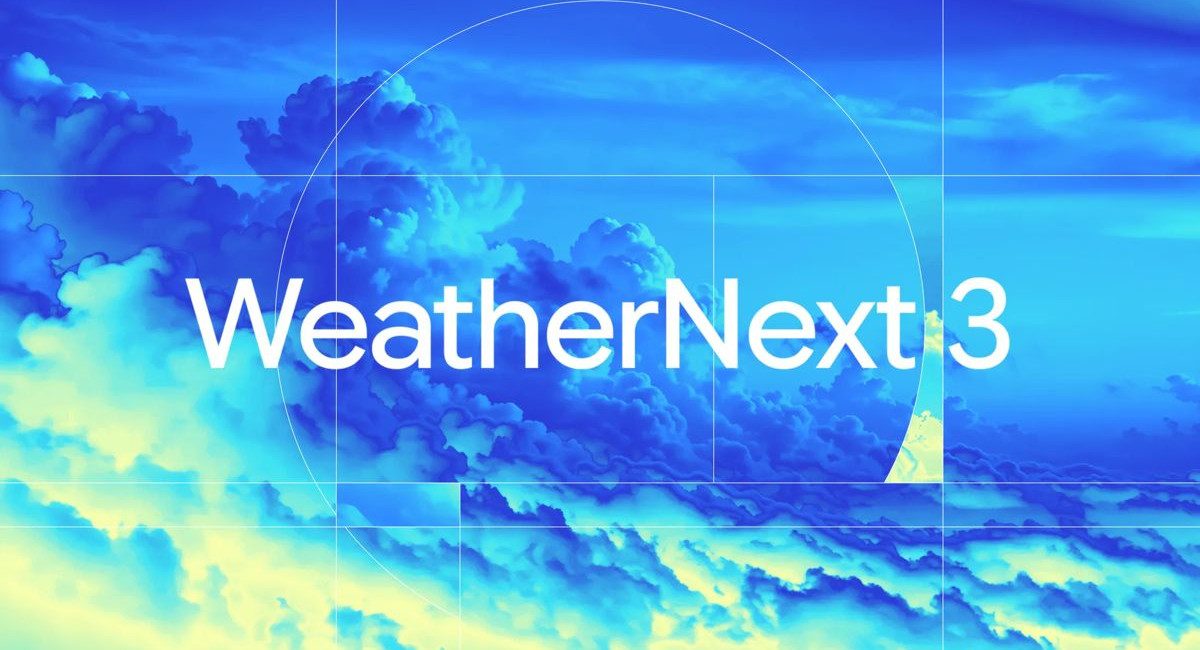
Meteorological forecasting is undergoing a monumental paradigm shift as artificial intelligence supplants classical computational methods. With the official rollout of WeatherNext 3, developed through a collaboration between Google DeepMind and Google Research, atmospheric science steps firmly into a new era. By relying exclusively on real-time observational data continuously gathered from a global network of geostationary satellites, this next-generation neural architecture bypasses the slow numerical simulations that have long constrained traditional meteorological predictions. Consequently, the platform delivers hourly operational updates, effectively eliminating the systemic multi-hour processing delays that previously hindered early response mechanisms during volatile weather events.
For decades, numerical weather prediction relied heavily on supercomputers to solve intricate fluid dynamics and thermodynamics equations. Models such as WeatherNext 2, released in November 2025, still depended on these computationally intensive physics frameworks. The computational overhead routinely created a six-hour lag between raw data acquisition and model output. Such delays frequently caused meteorologists to misjudge rapidly evolving local events, including flash rainstorms and sudden surface temperature shifts. WeatherNext 3 addresses this fundamental bottleneck by ingesting live radar and satellite feeds directly into its neural network, synchronizing digital atmospheric representations with real-world physical conditions as they occur.
The spatial resolution improvements embedded within WeatherNext 3 represent a significant technical milestone. The system generates a comprehensive global atmospheric picture roughly five times more detailed than its immediate predecessor. Crucial surface metrics, such as ground temperature and relative humidity, are computed across an exceptionally dense 5-kilometer grid network. Other surface variables maintain a crisp 10-kilometer resolution, while broader tropospheric indicators, including wind speed and direction, operate at a 25-kilometer scale. By employing a 64-member probabilistic ensemble system, the AI offers realistic risk distribution scenarios up to 15 days in advance, moving far beyond traditional single-trajectory deterministic forecasts.
Accurate precipitation modeling represents one of the most remarkable breakthroughs of this new architecture, yielding a 50 percent boost in overall forecast fidelity. Google achieved this leap by training its deep learning algorithms on high-grade global precipitation archives, notably NASA's Integrated Multi-satellite Retrievals for GPM (IMERG) dataset alongside Google's proprietary observational repositories. When subjected to rigorous verification against standard scientific benchmarks, including the Brier Score and Continuous Ranked Probability Score (CRPS), WeatherNext 3 demonstrated a 60 percent performance improvement over legacy observational baseline systems. This validates the capacity of advanced artificial intelligence to identify subtle atmospheric patterns that slip past conventional numerical modeling.
The practical ramifications of this technological leap extend beyond day-to-day consumer convenience. High-resolution forecasting acts as a key economic multiplier across major industries, particularly in the renewable energy sector. WeatherNext 3 provides targeted wind speed estimates calculated specifically at a 100-meter hub height, offering wind farm operators vital operational intelligence to maximize turbine efficiency. Similarly, precise cloud cover density metrics and solar irradiance tracking allow solar power generation plants to schedule daily grid feeds with unprecedented accuracy. Furthermore, regions across Latin America, Africa, and the Asia-Pacific that historically lacked high-fidelity local forecasting due to the high cost of supercomputing infrastructure can now access world-class weather intelligence.
For everyday users, this sophisticated neural system operates seamlessly behind familiar digital interfaces. Google has fully integrated WeatherNext 3 into Google Search, Google Maps, and the Gemini mobile application. By embedding these probabilistic engines directly into ubiquitous personal technology, everyday consumers receive hyper-local, real-time meteorological insights directly on their smartphones and computers without requiring specialized software or complex technical configurations.
MORE NEWS FOR YOU