 Help & Support
 SEARCH
How Android ends the lock-in era for password managers
SHARE IT
Choosing a password manager used to feel like a permanent commitment. Consumers who wanted to switch security providers faced a frustrating wall of technical friction and risks. For years, the digital security market was heavily shaped by vendor lock-in, forcing users to stick with software they might have outgrown simply because migrating sensitive data was a cumbersome ordeal. Android is now dismantling these artificial barriers by introducing a native, fully encrypted system designed for frictionless credential transfers between competing password management platforms.
Historically, switching password vaults meant exporting user credentials into an unencrypted plain text file, typically in CSV format. This practice introduced severe security vulnerabilities during the brief window the file sat on a local storage drive. Unprotected records left login details exposed to local spyware or malware scanning temporary directories. The process was not only stressful for everyday users but also represented an outdated compromise between convenience and fundamental cybersecurity principles.
The situation became even more complicated with the rise of passkeys, which were designed to replace traditional credentials with cryptographic keys tied directly to user hardware. While passkeys dramatically improve defense against phishing and account takeovers, they introduced a major operational drawback: zero cross-platform portability. Switching to a new manager required users to visit dozens of websites individually, revoke existing passkeys, and configure new ones from scratch. This friction effectively locked users into their chosen platforms and insulated password manager vendors from free-market competition.
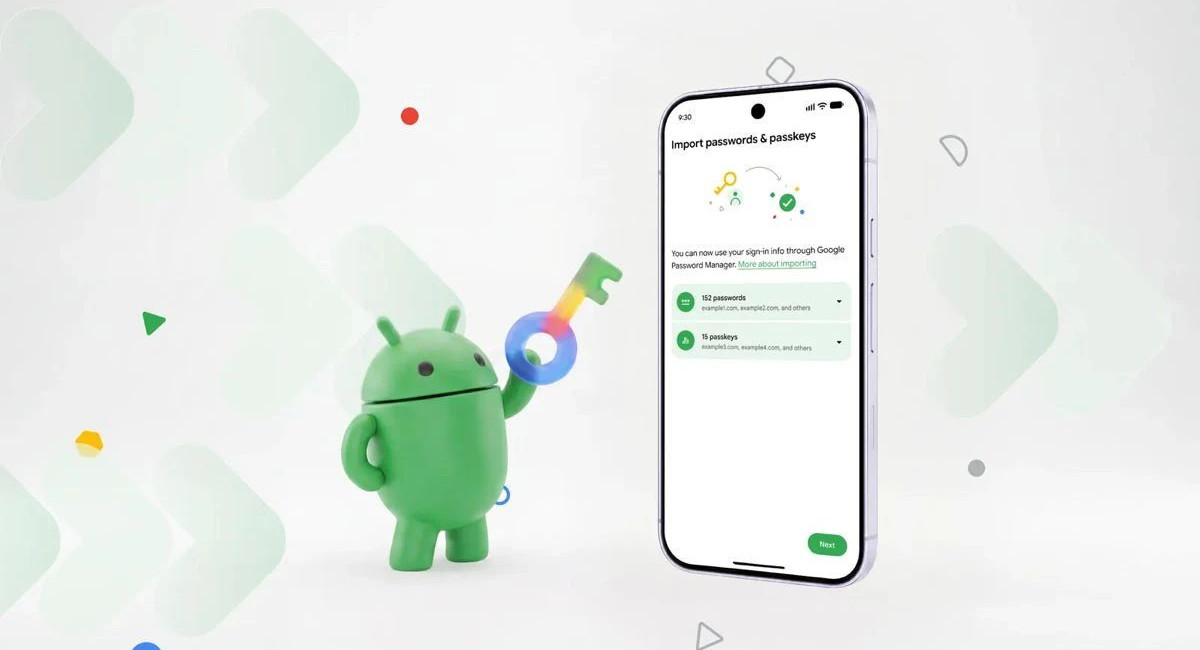
Android addresses this ecosystem flaw directly by routing transfers through the operating system itself, entirely eliminating unencrypted intermediate files. Built on the Credential Exchange Protocol and Format standard developed by the FIDO Alliance in partnership with major cybersecurity players, the new feature ensures end-to-end encryption throughout the entire migration flow. The source application encrypts the vault data, Android securely passes the package to the destination manager, and local biometric authentication ensures that transfers only happen with explicit user consent.
From a user experience standpoint, moving data between vault services is now remarkably simple. Upon installing a new password manager, selecting the import option prompts Android to automatically identify installed compatible apps. Within a few taps and biometric verifications, thousands of saved credentials and complex passkey structures move safely to their new destination. Backward compatibility is equally broad, with support extending to devices running Android 8 or newer, making the feature instantly available across the vast majority of active smartphones globally.
This technical shift fundamentally alters market dynamics for subscription password services. Prominent industry names including Google Password Manager, 1Password, Bitwarden, and Dashlane have fully embraced the standard, having actively contributed to the specifications established by the FIDO Alliance. Now that switching barriers are gone, providers must retain subscribers based purely on product quality, feature innovation, refined user interfaces, and responsive customer support rather than customer inertia.
MORE NEWS FOR YOU