 Help & Support
 SEARCH
Google Translate adapts for the era of long-form audio conversations
SHARE IT
Modern communication relies heavily on real-time, bi-directional voice translation powered by deep neural networks, transforming smartphones into personal interpreters. Reflecting this paradigm shift, official usage statistics from Google indicate that over a third of live translation sessions now exceed five minutes in length. This metric highlights a clear trend: users are no longer depending on translation platforms merely for quick navigation queries or single phrases, but rather for navigating complex international business discussions and lengthy personal conversations.
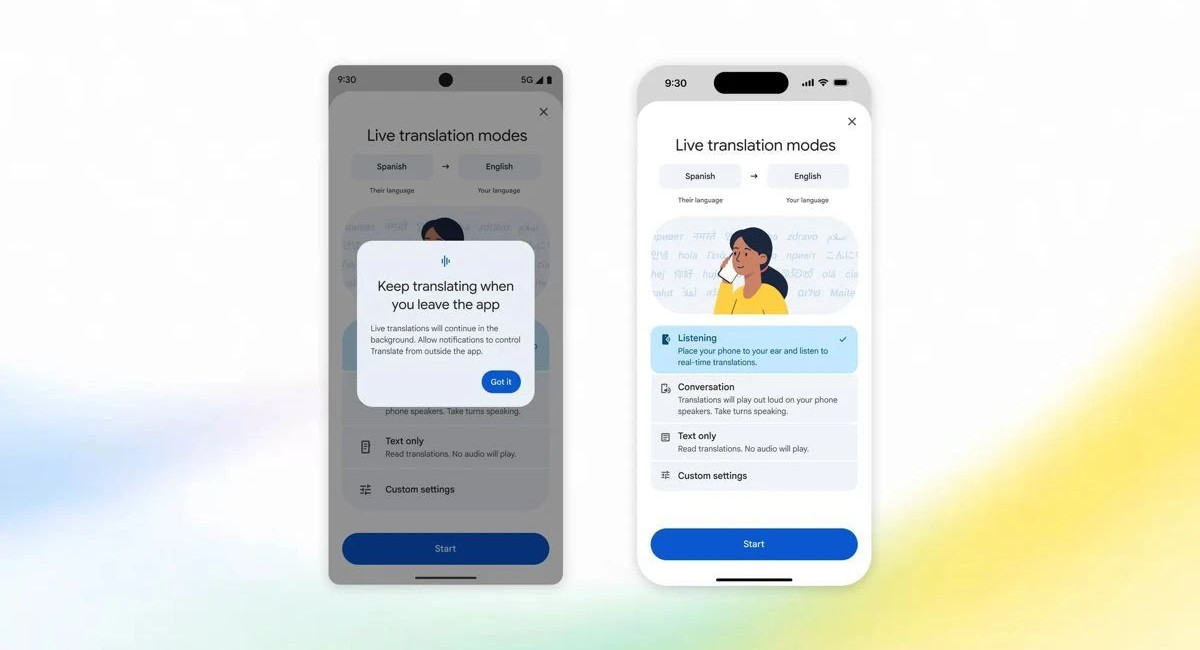
In response to this growing demand for sustained interaction, Google has rolled out key feature updates for its Translate application on both Android and iOS platforms. These upgrades focus on multitasking flexibility and enhancing personal privacy in public environments, leaning into the neural processing hardware found in modern smartphones to deliver faster and more efficient voice processing.
For Android users, the latest update addresses a long-standing constraint during extended translation sessions. Historically, holding a live conversation meant keeping the smartphone screen continuously lit. This requirement created a dual challenge: it rapidly depleted battery life due to high display consumption and effectively prevented users from accessing other crucial smartphone tools, such as map navigation or note-taking apps, during an ongoing dialogue.
Under the new system architecture, Google Translate continues to process live speech seamlessly in the background, even when the device screen is completely locked. The operating system permits the background microphone to capture ambient audio and transmit it instantly to Google servers for real-time processing while the phone remains tucked away in a pocket or resting on a conference table. To address potential privacy concerns associated with continuous background listening, the system integrates transparent hardware access indicators, displaying a prominent visual security badge at the top of the screen to confirm compliance with global data protection standards.
Meanwhile, the update tailored for the iOS ecosystem introduces a pragmatic physical feature previously refined on competing platforms: direct earpiece audio routing. Rather than broadcasting translated output publicly through the main loudspeaker at the bottom of the device, Google Translate now interfaces with the native proximity sensors on Apple devices.
When a user lifts the iPhone to their ear during a translation session, the device automatically routes the translated audio stream straight to the top earpiece, replicating the familiar ergonomics of a standard phone call. This subtle design adjustment solves two practical issues at once. It eliminates the difficulty of hearing synthetic speech through speakerphones in crowded transit hubs like airports or train stations, while simultaneously offering discrete, private listening without forcing the user to wear dedicated wireless earbuds.
Together, these cross-platform functional improvements demonstrate Google's ongoing commitment to refining real-time translation, shifting the focus from basic vocabulary conversion to fluid, hands-free conversational continuity across diverse real-world environments.
MORE NEWS FOR YOU