 Help & Support
 SEARCH
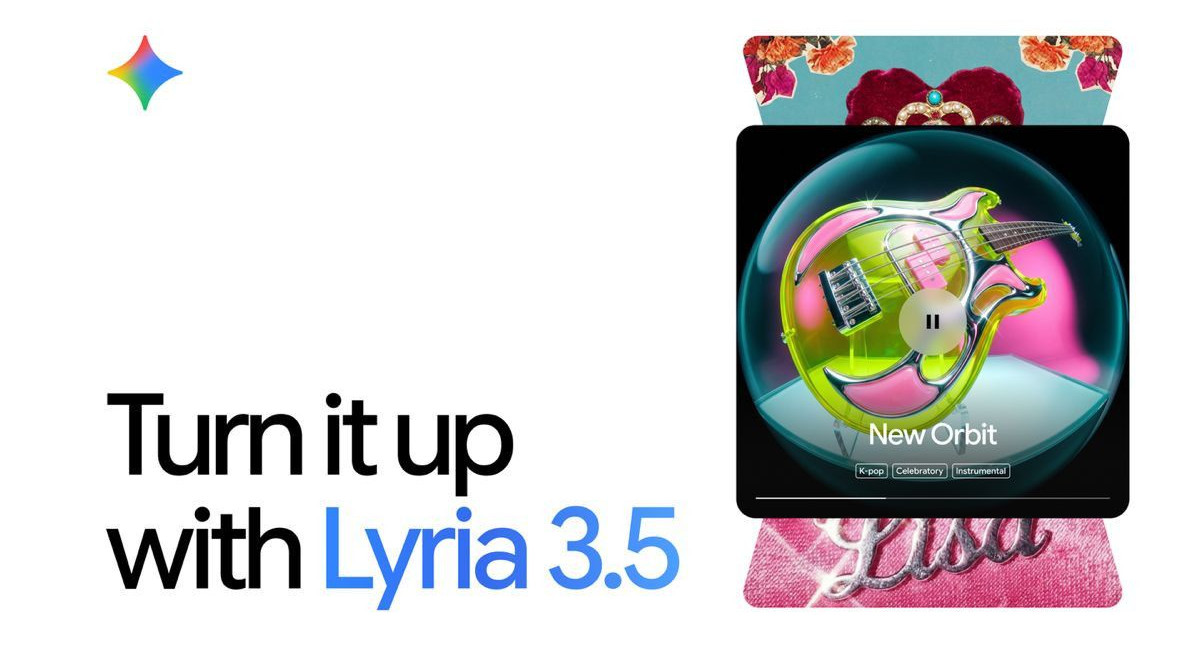
Google turns Gemini into a portable recording studio with Lyria 3.5
SHARE IT
Artificial intelligence has officially taken another massive leap into the creative domain, transforming ordinary mobile devices into dynamic music production suites. Google has introduced its updated generative audio model, Lyria 3.5, embedding full music creation capabilities directly inside the Gemini mobile app. Rather than keeping this powerful technology locked within obscure research labs or standalone desktop environments, the tech giant is placing studio-grade composition tools directly into the hands of everyday users. Along with this consumer-facing integration, the company has released a comprehensive Lyria 3.5 API, laying the groundwork for software developers, video game creators, and digital audio platforms to harness on-demand audio generation within their own ecosystems.
The core attraction for users lies in the seamless workflow inside Gemini. By entering simple text prompts specifying desired genres, instrumentation, mood, or tempo shifts, users can generate fully structured, high-fidelity songs lasting up to three minutes. Under the hood, Google's upgraded neural architecture tackles many of the technical glitches that plagued earlier text-to-music models. Smooth transitions between verses and choruses, crystal-clear vocal rendering, and precise rhythm controls are now handled automatically on cloud servers. Outputs are delivered in under fifteen seconds for one-minute tracks, complete with lossless export formats like FLAC and WAV, as well as vocal isolation capabilities for professional editing in digital audio workstations.
To bridge the gap between AI generation and actual distribution, Google has forged a landmark partnership with the European music streaming service Deezer. This collaboration enables users to publish their Gemini-created tracks directly to Deezer playlists. However, this ecosystem is built on strict boundaries to protect traditional artists and streaming revenue models. Every AI-generated song uploaded through this bridge is clearly tagged and monitored. To prevent platform manipulation, fraudulent royalty claims, or spam generation, the system automatically screens each file using embedded digital markers before public streaming is allowed.
Underpinning every track produced by Lyria 3.5 is Google's proprietary SynthID cryptographic watermarking technology. This invisible digital tag ensures that AI-generated audio can be instantly identified by distribution systems, maintaining transparency without degrading sound quality. Beyond watermarking, the model features built-in content filters designed to block prompts requesting voice cloning or imitating recognizable recording artists without authorization. These safeguards ensure that creators can experiment with styles and arrangements while respecting existing intellectual property frameworks.
This product launch comes at a turbulent moment for the broader generative media industry, which is currently navigating a wave of legal battles over copyright infringement. Just days prior to Google's announcement, a landmark court ruling in Munich regarding the dispute between German performance rights organization GEMA and AI music platform Suno established significantly stricter regulatory boundaries within the European Union. The court determined that tech companies must prove the lawful origin of their training datasets before offering algorithmically generated media services to European consumers.
Google appears well-positioned to navigate these legal hurdles. Unlike competitors facing mounting lawsuits over scraped content, Google trained Lyria 3.5 entirely on fully licensed audio libraries and proprietary agreements secured through YouTube Music. By combining strict prompt moderation with compliant training data, the company has built a model that inherently respects the European Union's AI Act. As legal pressure mounts across the tech landscape, Google's proactive compliance strategy could serve as the industry standard for commercializing generative audio responsibly.
MORE NEWS FOR YOU