 Help & Support
 SEARCH
Google unveils Lyria 3 for instant music creation
SHARE IT
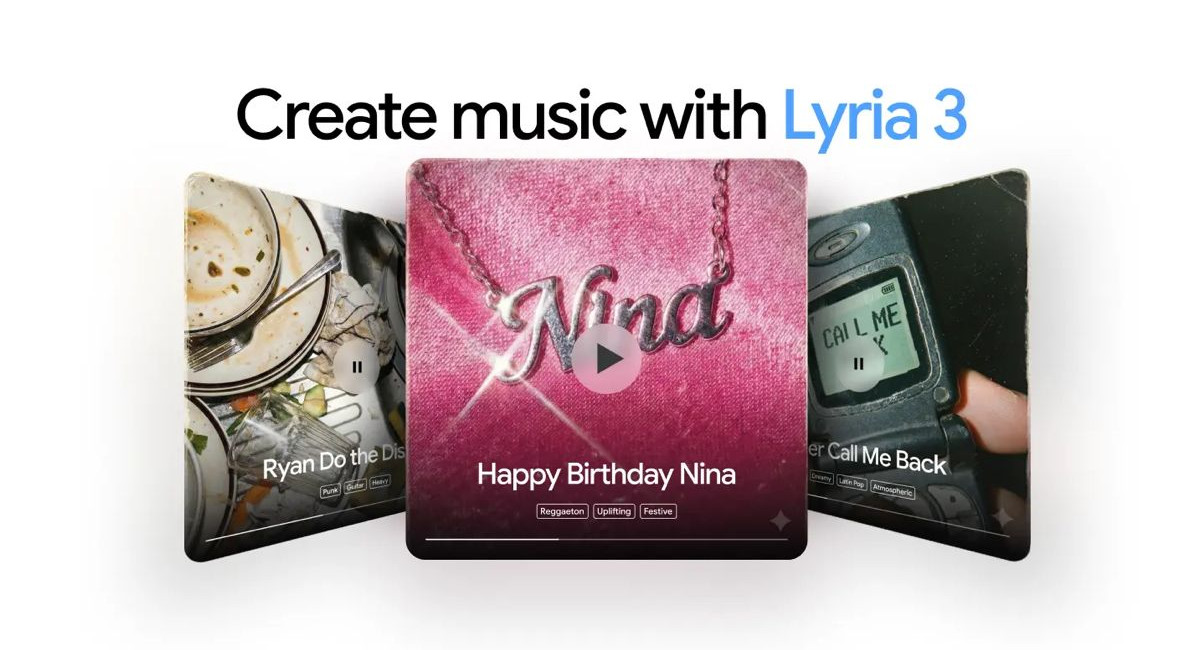
Google is making a significant leap in the creative application of artificial intelligence by introducing its latest generative music model, Lyria 3. While the tech giant has already woven Gemini into the fabric of everyday productivity tools like Docs, Maps, and Chrome, this newest venture pivots toward the artistic realm. Lyria 3 is designed to bridge the gap between abstract thought and musical composition, enabling users to transform simple text prompts, static images, or even short video clips into fully realized audio tracks within a matter of seconds.
Currently available in beta through the Gemini app, Lyria 3 offers a remarkably intuitive interface for music generation. A user can provide a quirky description, such as a soulful R&B track about a lost household item, and the model will generate a catchy melody to match. The innovation goes beyond text, as the AI can "read" the mood of an uploaded photo or video to influence the resulting sound. While the system automates much of the process, it does not strip away user agency; creators retain significant influence over the final product, with the ability to adjust the tempo, choose specific vocal styles, and define the overall genre.
Despite its impressive capabilities, Google is positioning Lyria 3 more as a tool for personal expression than a professional studio replacement. The model currently produces tracks capped at 30 seconds, suggesting its primary utility lies in social media content, such as YouTube Shorts, rather than full-scale album production. To complement the audio, each track is paired with unique cover art generated by Nano Banana, making the creations ready for instant sharing. This integration with YouTube Shorts via the Dream Track feature highlights Google’s strategy to place AI-driven creativity directly into the hands of mobile content creators.
Addressing the growing concerns surrounding AI and intellectual property, Google has implemented several safeguards. Every track generated by Lyria 3 is embedded with SynthID, a digital watermarking technology that allows the system to identify AI-originated content with high accuracy. Furthermore, the model is programmed to prioritize original expression. If a user attempts to mimic a specific famous artist, Lyria 3 will only use that artist’s style as a very broad inspiration rather than a direct copy. Google has acknowledged that while these boundaries are in place, they may not be infallible, and the company remains open to copyright feedback.
The rollout of Lyria 3 marks the culmination of several years of internal testing and refinement. The model is now accessible to users over the age of 18 in various regions, supporting a wide array of languages including English, German, Spanish, French, Hindi, Japanese, Korean, and Portuguese. While the initial launch is focused on the web-based Gemini interface, Google has confirmed that a mobile app integration is imminent. By lowering the barrier to entry for music production, Lyria 3 represents a new chapter in how Gemini users can interact with digital media, turning fleeting ideas into audible reality.
MORE NEWS FOR YOU