 Help & Support
 SEARCH
OpenAI enters the lab with GPT-Rosalind
SHARE IT
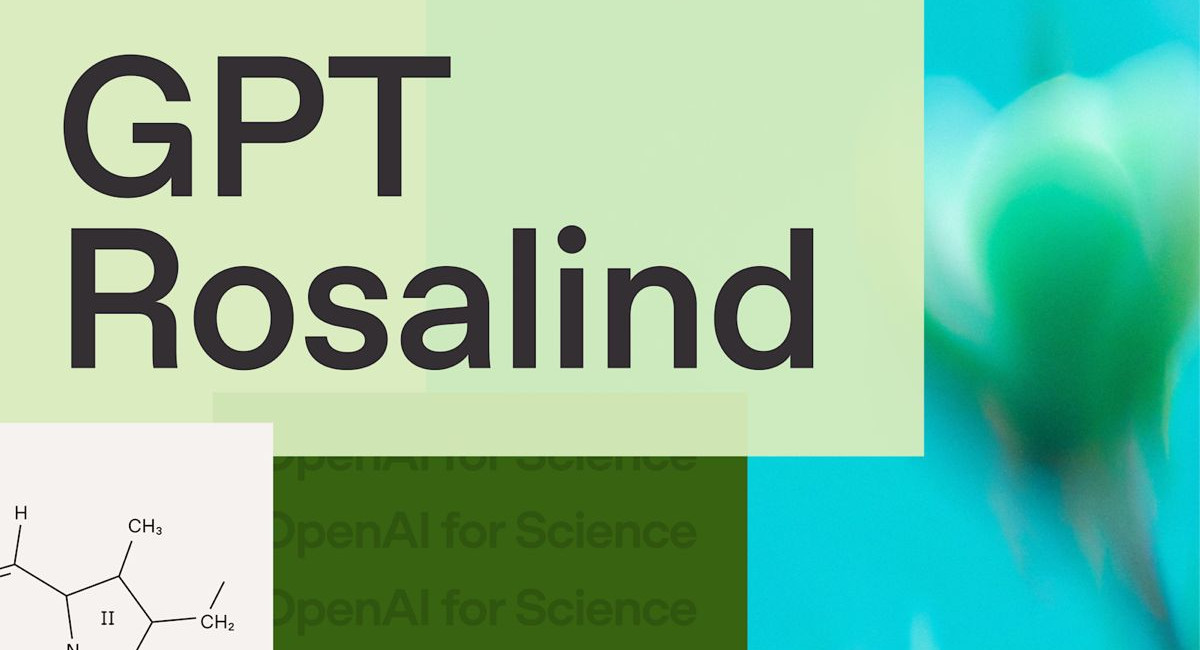
OpenAI has officially signaled its intent to compete in the complex arena of life sciences with the unveiling of GPT-Rosalind. This new model represents a strategic pivot, moving beyond the all-purpose capabilities of its predecessors to focus exclusively on the intricate demands of biochemistry, genomics, and protein engineering.
Named in honor of Rosalind Franklin, the British chemist whose work was instrumental in uncovering the double-helix structure of DNA, the model is designed to be a reasoning partner for researchers. Unlike the recently released GPT-5.4, which excels at processing high volumes of generic data, GPT-Rosalind is built for the precision required in a laboratory setting. Its primary goal is to help scientists synthesize vast amounts of academic evidence, formulate complex biological hypotheses, and autonomously design experimental frameworks.
The timing of this release highlights a growing rivalry between the worlds leading AI laboratories. For years, Google DeepMind has held a significant lead in this sector with its AlphaFold program, which fundamentally changed how scientists predict protein structures. By introducing a model specifically tuned for biological reasoning, OpenAI is directly challenging DeepMinds dominance, suggesting that domain-specific intelligence may be more valuable than raw computational power when solving the mysteries of the natural world.
Performance metrics released by OpenAI indicate that this specialized approach is paying off. In industry benchmarks such as BixBench, GPT-Rosalind achieved top-tier scores. Even more notable was its performance in the LABBench2 suite, where it surpassed the more general GPT-5.4 in six out of eleven specialized tasks. These results reinforce the idea that as AI matures, the industry is moving toward a modular future where different models are "hired" for their specific expertise rather than their general knowledge.
The practical applications of GPT-Rosalind are already being explored through a series of high-profile partnerships. Major pharmaceutical and biotech entities including Amgen, Moderna, and Thermo Fisher have gained early access to the model. Additionally, research institutions like the Allen Institute and Los Alamos National Laboratory are utilizing the AI to explore innovations in protein design and catalyst development. These collaborations serve as a testing ground for how AI-guided discovery can accelerate the development of new therapies and materials.
Safety and ethical considerations remain at the forefront of this rollout. Given the sensitive nature of biological research, OpenAI has implemented a rigorous qualification and safety review process for organizations seeking access. The company has stated that it will continue to refine the models reasoning capabilities while expanding its support for long-horizon research workflows that require complex, multi-step planning.
As the tech industry continues to pour resources into specialized AI, GPT-Rosalind stands as a testament to the convergence of technology and biology. The move suggests that the next great breakthroughs in medicine and genetics may not come from human intuition alone, but from the collaborative efforts of scientists and models capable of navigating the massive datasets of the life sciences.
MORE NEWS FOR YOU