
 Help & Support
 SEARCH
History made as Artemis II crew returns from record breaking lunar journey
SHARE IT
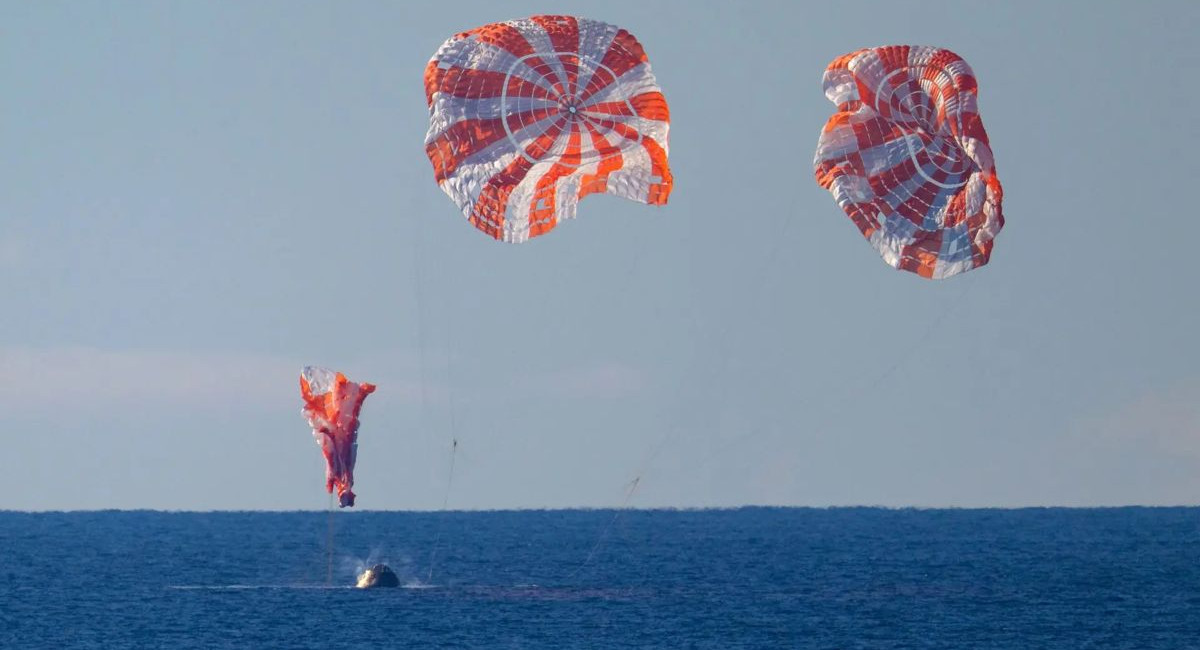
The vast expanse of the cosmos has once again yielded to human ingenuity, as the four intrepid astronauts of the Artemis II mission have successfully completed their monumental ten-day journey around the Moon. Returning to Earth with a spectacular splashdown in the Pacific Ocean off the coast of San Diego, Reid Wiseman, Victor Glover, Christina Koch, and Jeremy Hansen of the Canadian Space Agency have firmly etched their names into the annals of space exploration. At precisely 5:07 p.m. PDT on Friday, the Orion spacecraft pierced the atmosphere, concluding a voyage that tested the absolute limits of modern aerospace engineering while capturing the collective imagination of a global audience. The flawless return of these modern explorers signifies a profound triumph for international collaboration and sets a formidable precedent for the next era of deep space exploration.
This extraordinary expedition was far more than a routine orbital flight; it was a journey of unprecedented distances that completely rewrote the record books. Surpassing a milestone that had stood unchallenged for more than half a century, the Artemis II crew became the first humans to travel deeper into space than anyone before them. By reaching a staggering distance of 252,756 miles from our home planet, they decisively broke the long-standing record established by the legendary Apollo 13 mission back in 1970. Throughout the entirety of their rigorous ten-day mission, the astronauts covered an awe-inspiring total distance of 694,481 miles. This monumental achievement underscores the immense capability of the Orion spacecraft, proving that humanity is ready to push the boundaries of what is possible in the unforgiving environment of deep space.
The dramatic conclusion of the mission was executed with absolute military precision. Following their splashdown in the open waters of the Pacific Ocean, a highly coordinated recovery operation immediately sprang into action. A specialized joint team comprising personnel from NASA and the United States military swiftly approached the bobbing capsule to assist the crew. Emerging from the confines of their spacecraft, the astronauts were airlifted via helicopter to the waiting amphibious transport dock, the USS John P. Murtha. There, they underwent preliminary medical evaluations to ensure their bodies were readjusting appropriately to gravity. After these initial checkups, the crew is scheduled to be transported back to the Johnson Space Center in Houston, where a highly anticipated press conference will offer the world a firsthand account of their celestial adventures.
The story of this historic voyage began ten days prior, launching amid thunderous applause at 6:35 p.m. on April 1 from Launch Pad 39B at the iconic Kennedy Space Center in Florida. Propelled by the colossal SLS rocket, the crew embarked on a mission designed to pave the way for future lunar habitation. Interestingly, amidst the flawless execution of complex orbital mechanics, the crew encountered a mundane, earthly frustration: technological glitches with their email software. Reports emerged that the astronauts struggled with two different versions of Microsoft Outlook, neither of which functioned correctly. This humorous contrast between mastering deep space travel and battling standard office software provided a deeply relatable human element to an otherwise highly technical endeavor.
Despite minor software annoyances, the crew remained highly engaged with the public, transforming their spacecraft into a remarkable vantage point for astronomical photography. Armed with state-of-the-art consumer technology, including an iPhone 17 Pro, the astronauts beamed back an astonishing collection of imagery. During their breathtaking lunar flyby on April 6, they managed to capture a spectacular solar eclipse, alongside more than 7,000 detailed photographs of the lunar surface. The world was treated to visually arresting views of ancient lava flows, massive impact craters, and subtle color variations across the desolate Moon. Furthermore, their lenses captured the mesmerizing beauty of the Milky Way and the poignant sight of an Earthset, reminding us of our shared home in the cosmic void.
Beyond breaking records and capturing stunning visuals, the Artemis II mission was fundamentally driven by a rigorous scientific mandate. The crew dedicated a significant portion of their flight to supporting critical investigations formulated by NASA to prepare future astronauts for long-term habitation. A primary focus was to gather comprehensive health data concerning the effects of long-duration spaceflight. By studying how human tissue responds to the sustained conditions of microgravity and the intense radiation environment of deep space, scientists hope to develop robust countermeasures. This invaluable data will serve as a cornerstone for humanity's ultimate goal of establishing a permanent lunar base in the decades to come.
As the dust settles on this triumphant mission, the focus of the global space community is already shifting toward the horizon. NASA is looking ahead with immense optimism to the highly anticipated Artemis III mission, slated for next year. Building upon the resounding success of the Artemis II flight, the space agency plans to appoint a new crew for the Orion spacecraft to test integrated operations with commercially manufactured Moon landers in low Earth orbit. For now, however, the world celebrates the safe return of Reid Wiseman, Victor Glover, Christina Koch, and Jeremy Hansen, whose courage has successfully ushered in a thrilling new chapter in the grand story of human spaceflight
MORE NEWS FOR YOU