 Help & Support
 SEARCH
Meta takes on Reddit with a stealth launch Of Forum
SHARE IT
Meta has quietly rolled out a brand-new standalone application named Forum. Without any grand announcements or traditional press releases, the social media giant slipped the software into the App Store. The launch was first detected by social media consultant Matt Navarra, who noticed the listing and shared details online. This fresh platform represents a strategic attempt by the tech conglomerate to separate community discussions from the main social feed, creating a dedicated hub focused entirely on Facebook Groups.
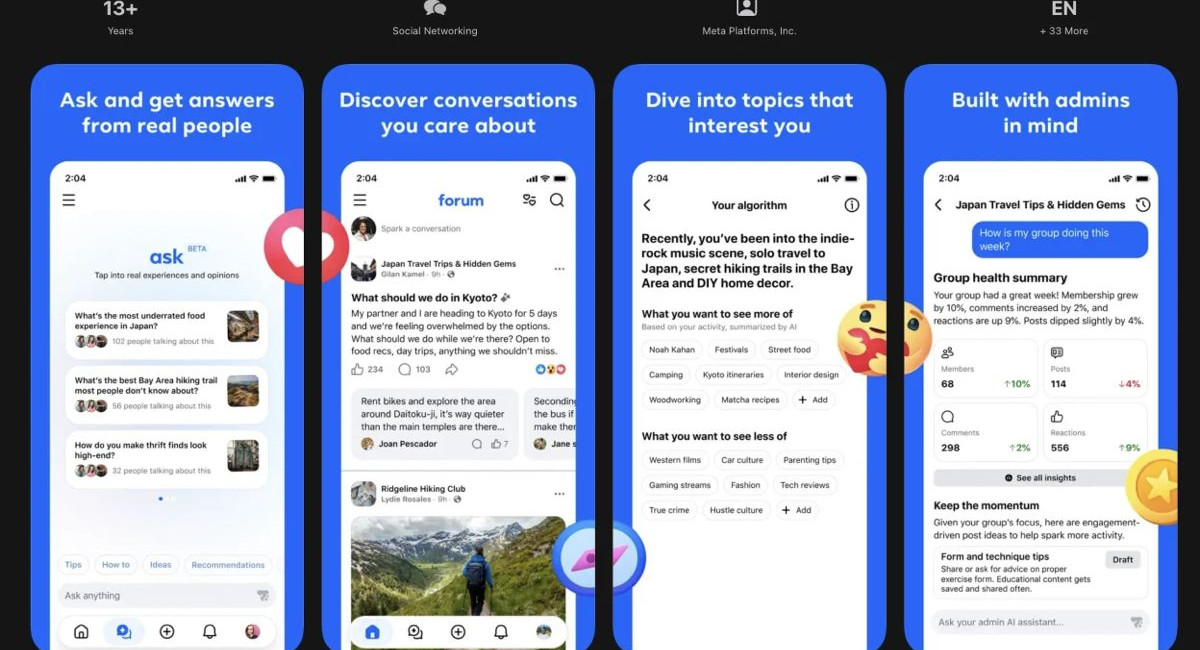
The core philosophy behind Forum appears to be a direct challenge to established community-centric platforms, most notably Reddit. Marketing materials within the store description emphasize that the app is a dedicated space for the conversations that matter most to you, promising users real answers from real people. By creating a separate ecosystem for group interactions, Meta hopes to foster deeper discussions that often get buried under the endless scroll of the main Facebook platform.
For users accustomed to the chaotic nature of the traditional Facebook algorithm, Forum offers a starkly different user experience. Instead of a feed cluttered with updates from friends, sponsored advertisements, corporate pages, and viral videos, this new interface focuses exclusively on the groups a user has joined. Upon launching the app for the first time, individuals are prompted to select their primary interests, allowing the system to curate a feed that emphasizes relevant discussions rather than what happens to be trending globally.
Integration with the existing Facebook infrastructure remains seamless. To access Forum, individuals must log in using their standard Facebook credentials. Once connected, all group memberships, user profiles, and past activities automatically carry over to the new platform. This cross-platform connection works both ways; any comment, post, or interaction made within Forum will instantly reflect on the main Facebook application, ensuring that users do not lose touch with their communities regardless of which app they choose to open.
One of the most notable design choices is how the platform handles user identity. While Reddit is famous for its culture of complete anonymity, Forum takes a more compromised approach. Users are permitted to use pseudonyms and customizable nicknames for their public interactions, mirroring a feature already available on certain parts of Facebook. However, total anonymity is an illusion here; group administrators and moderators retain the ability to see the true identity and real names behind these alternative usernames, maintaining accountability within the communities.
This launch is not Meta's first attempt to isolate its community features into a standalone product. Long before the company rebranded from Facebook, a dedicated Groups app was released in 2014, only to be shut down in 2017 due to low user adoption. Tech analysts note that the digital landscape has shifted drastically since then, with niche communities and specialized discussion forums becoming highly valuable real estate in the modern internet economy.
What truly separates this new iteration from its decade-old predecessor is the integration of advanced artificial intelligence capabilities. Forum introduces a feature called Ask, which functions as an intelligent search tool. Instead of forcing users to manually browse through multiple groups to find specific recommendations or advice, Ask aggregates relevant discussions from across various communities to deliver instant answers. Furthermore, the company has integrated an AI-powered assistant designed specifically for group administrators to streamline moderation tasks and manage community guidelines more efficiently.
Whether Forum will succeed where past experiments failed remains an open question, but its quiet arrival signals a major shift in how Meta views the future of online communities.
MORE NEWS FOR YOU