 Help & Support
 SEARCH
Norway bans AI from elementary schools
SHARE IT
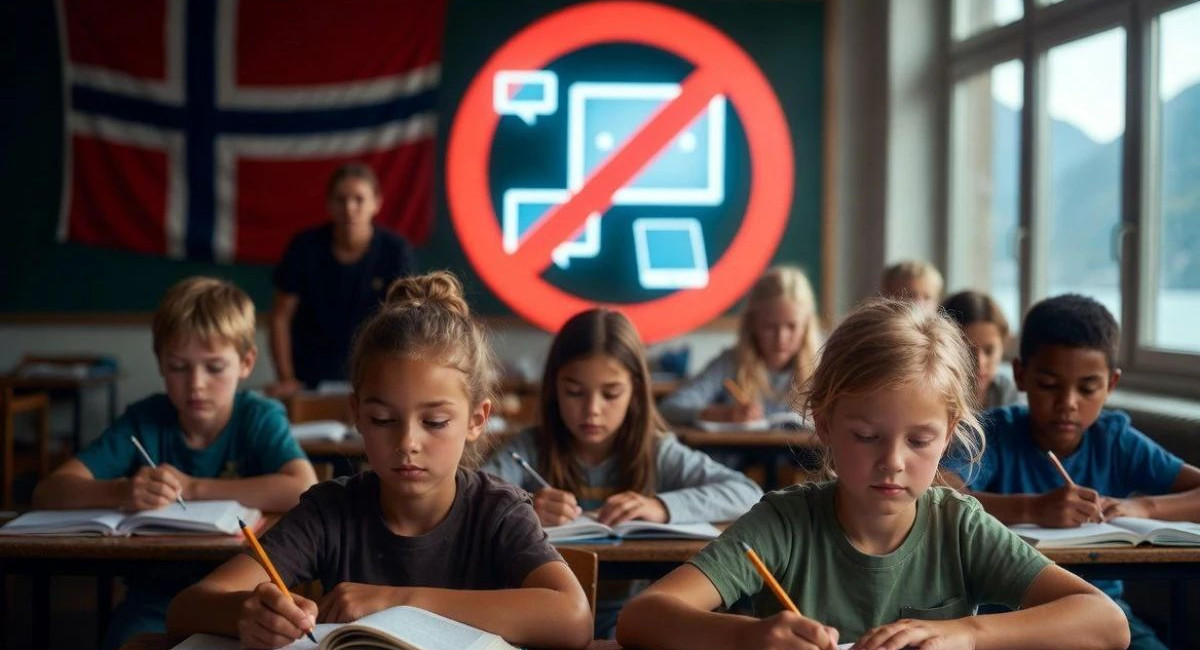
In a move that challenges the global rush toward digital integration, Norway has declared a major shift in its educational strategy. Starting this late August, the Norwegian government will enforce a near-total ban on generative artificial intelligence across elementary schools nationwide. The decision marks a significant turning point in the international debate over technology in education, as policymakers increasingly question whether Silicon Valley’s latest innovations belong in the hands of young children.
Announcing the new framework, Prime Minister Jonas Gahr Støre delivered a clear message on the primary focus of early education. He stated that the premature introduction of AI tools creates a high risk of children bypassing critical developmental stages. According to the government, the fundamental purpose of the school environment must remain centered on helping young minds learn to read, write, and master mathematics through traditional cognitive reasoning.
The upcoming policy introduces a structured, age-based system that replaces the previous unregulated access to chatbots and digital platforms. Under the new guidelines, children between the ages of 6 and 13, spanning from the first to the seventh grade, will be entirely restricted from utilizing generative AI for schoolwork. The government plans to pair this restriction with a legislative push to reintroduce physical books to classrooms, systematically moving away from the tablet-heavy setups that have dominated Nordic classrooms for the past decade.
As students grow older, the restrictions gradually ease to foster digital literacy rather than complete dependence. Teenagers aged 14 to 16 in lower secondary education will be permitted to engage with AI platforms, but only under the direct supervision of trained educators who can guide their reasoning. By the time students reach the ages of 17 to 19, the curriculum shifts toward preparing them for higher education and the modern workforce. At this final stage, young adults will be encouraged to use AI independently and responsibly, treating it as an advanced resource rather than a shortcut for basic intellectual tasks.
This regulatory offensive is not an isolated experiment, but part of a broader, long-term campaign by Norway to reclaim childhood from digital encroachment. The nation previously instituted a strict smartphone ban in schools, which yielded highly encouraging results. Educational researchers like Sara Abrahamsson documented that removing phones from middle schools led to improved academic performance, a dramatic reduction in bullying, and a sixty percent decline in student visits to healthcare specialists for psychological issues, particularly among young girls.
Encouraged by these outcomes, the Norwegian administration is pushing the boundaries of tech regulation even further. Before the end of the year, parliament is expected to debate a groundbreaking bill that seeks to ban children under the age of 16 from using social media altogether, mirroring recent ambitious legislative efforts seen in Australia.
While international debates continue over how to regulate powerful systems like ChatGPT, Gemini, and Copilot, Norway’s decisive actions set a bold precedent. By prioritising cognitive development over technological trends, the country is betting that the future of workforce strength depends on securing the foundational skills of its youngest citizens first.
MORE NEWS FOR YOU