
 Help & Support
 SEARCH
OpenAI and Google collaborate to fight the war on digital fakes
SHARE IT
At a time where artificial intelligence can generate hyper-realistic media with a few keystrokes, the line between digital reality and synthetic creation has become increasingly blurred. The rapid evolution of generative models has raised significant concerns regarding misinformation and deepfakes, prompting technology leaders to rethink how digital content is tracked and authenticated. Addressing this challenge, OpenAI has unveiled a comprehensive update to its content provenance strategy, establishing a multi-layered verification ecosystem aimed at restoring trust and transparency across the internet.
Rather than relying on a single defensive measure, OpenAI is shifting toward an ecosystem-driven approach that integrates cryptographic signatures, robust digital watermarking, and public verification tools. The cornerstone of this initiative is the company's full conformance with the standards set by the Coalition for Content Provenance and Authenticity, widely known as C2PA. By officially adopting these guidelines, OpenAI ensures that its generative products attach secure metadata, or Content Credentials, directly to digital assets at the exact moment of creation. This metadata serves as a digital passport, documenting the origin of the file and any subsequent modifications.
The true challenge of content provenance, however, lies in ensuring that these digital credentials survive the journey across various online networks. Cryptographic metadata attached to an image can easily be stripped away when shared on social media, sent via messaging applications, or cropped by an editor. By adhering strictly to C2PA conformance, OpenAI is enabling external platforms, search engines, and web browsers to recognize, preserve, and pass along this verification data. This collective cooperation ensures that critical information about an asset's synthetic origins remains intact, regardless of how many times it is re-posted or downloaded.
Recognizing that metadata alone cannot guarantee absolute security, OpenAI has joined forces with Google DeepMind to implement a more resilient layer of protection using SynthID technology. This advanced digital watermarking method embeds an imperceptible, highly durable signal directly into the pixel structure of images. Initially rolling out for images generated through ChatGPT, Codex, and the OpenAI API, SynthID acts as an invisible stamp that remains detectable even after extensive alterations. Whether an image is compressed, resized, or heavily edited, the underlying watermark is designed to endure, providing a reliable backstop when traditional metadata is lost.
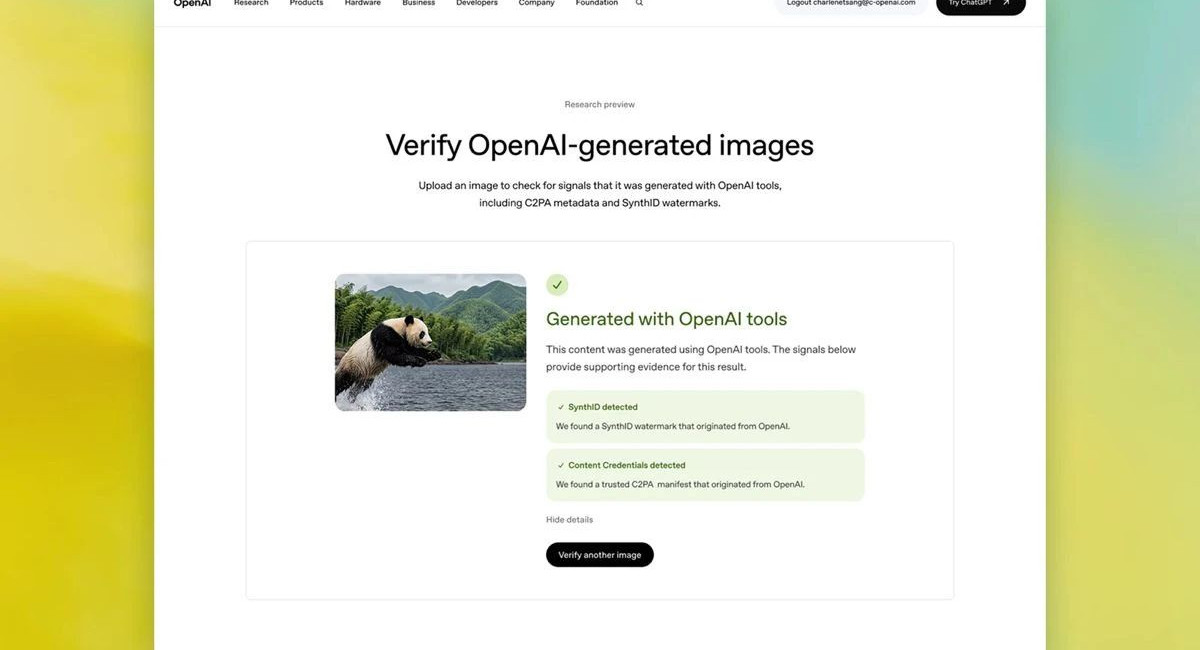
To empower everyday internet users and researchers in the fight against digital deception, OpenAI is also previewing an early public verification tool. This new web-based platform allows individuals to upload digital media and instantly check for the presence of content provenance signals. The tool is capable of detecting both C2PA Content Credentials and SynthID watermarks, explicitly confirming whether a specific image originated from OpenAI systems. By making these advanced detection technologies accessible to the general public, the initiative aims to decentralize the process of verification and foster a more media-literate online community.
This coordinated push marks a significant shift in how the technology sector manages the downstream impact of generative models. Instead of treating content verification as an isolated, proprietary feature, major industry players are recognizing that interoperability is the only viable path forward. The partnership between OpenAI and Google highlights a growing consensus that combatting digital manipulation requires cross-company standards that span across competitive ecosystems, ensuring that safety protocols remain effective regardless of which tool was used to create the media.
Looking ahead, the long-term success of this trust ecosystem will depend entirely on widespread adoption by software developers, camera manufacturers, social media networks, and web browsers. While OpenAI, Google, and other leaders are building the foundational infrastructure, the ultimate goal is a fully integrated internet where the history of any digital asset is transparent and verifiable at a glance. As synthetic media continues to scale globally, establishing these robust provenance frameworks is no longer just a technological milestone, but a critical necessity for preserving the integrity of the digital world.
MORE NEWS FOR YOU