 Help & Support
 SEARCH
OpenAI responds to competition with GPT-5.2
SHARE IT
The technological "chessboard" of artificial intelligence is being rearranged once again, as OpenAI has proceeded with the immediate release of the new GPT-5.2 model family. In a move interpreted as a direct response to the latest developments from competitors, specifically the launch of Gemini 3, the company is launching three new versions of its popular model. These versions promise not only increased intelligence and speed but also deeper integration into the Microsoft ecosystem.
Three Versions for Every Need
The new GPT-5.2 series constitutes more than just a monolithic upgrade; it is distinguished into three specialized categories designed to cover different aspects of modern digital work:
- GPT-5.2 Instant: This serves as the "spearhead" regarding speed and economy. This model is intended for daily routine tasks, such as quick text drafting and translations. OpenAI aims to make Instant the default choice for the average user desiring immediate results with low resource costs.
- GPT-5.2 Thinking: This is where heavy "intellectual" work focuses. Designed for complex strategic reasoning and solving intricate problems, Thinking is addressed to professionals requiring analytical depth.
- GPT-5.2 Pro: The perfect balance combining high intelligence and reliability, ideal for demanding applications where accuracy is the prerequisite.
These new tools are already available to subscribers of Plus, Pro, Business, and Enterprise plans, as well as to developers via the relevant API.
Dizzying Performance: The Benchmarks of Truth
According to data published by OpenAI, the leap in performance is impressive. The "Thinking" model appears to surpass or tie top industry professionals in 70.9% of comparisons regarding knowledge work tasks (based on the GDPval index). However, the most impressive element is efficiency: the model executes these tasks over 11 times faster than a human, at a cost of less than 1% compared to an expert's fee.
In the programming sector, performance is equally notable. GPT-5.2 scores 55.6% on the SWE-Bench Pro benchmark and reaches 80% on SWE-Bench Verified. These numbers translate into practical benefits for developers, offering more reliable debugging and faster feature implementation in applications. Furthermore, its ability to analyze large documents has improved dramatically, achieving near 100% accuracy in long-context reasoning tests of 256,000 tokens.
Microsoft "Arms" Copilot
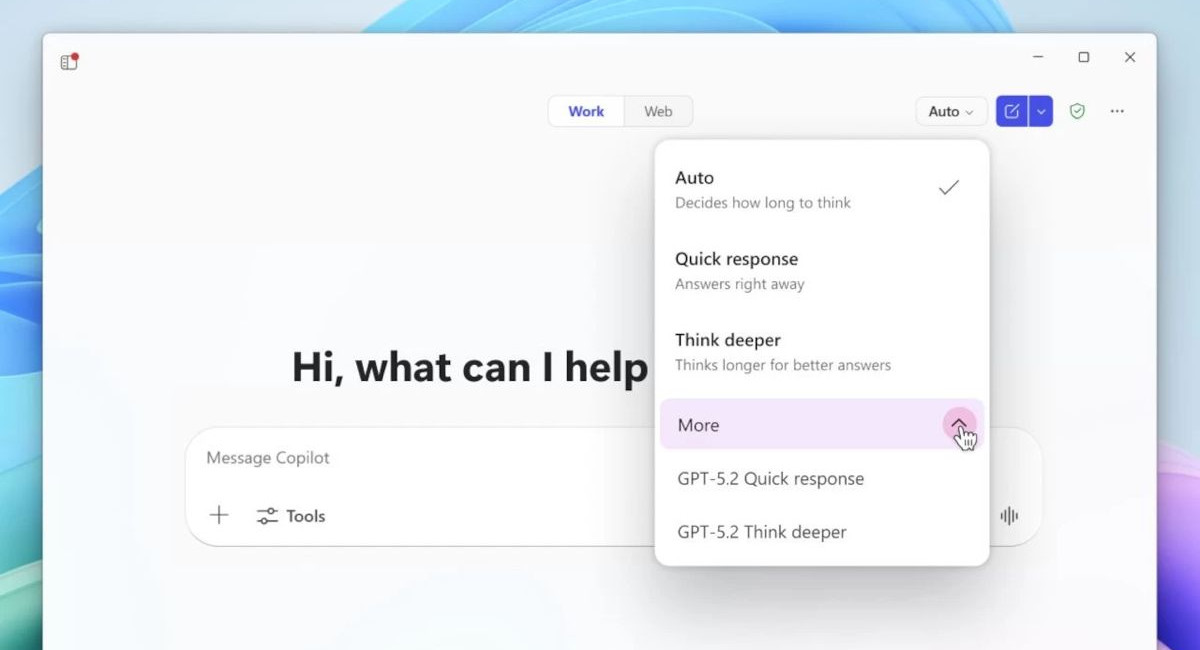
Parallel to OpenAI’s announcement, Microsoft is moving ahead with the immediate integration of GPT-5.2 into Microsoft 365 Copilot and Microsoft Copilot Studio. This move gives businesses access to a tool that is not only smarter but also more capable of understanding corporate data.
Through "Work IQ" technology, the new model can combine information from the user's work files, offering strategic suggestions and market analyses based on actual business data. This interconnection is expected to significantly upgrade the user experience in office applications, transforming Excel and PowerPoint into dynamic assistants capable of perceiving the broader context of a project.
Emphasis on Safety and Reliability
At a time when AI safety is under the microscope of regulatory authorities and governments, OpenAI emphasizes the improved behavior of the new model. Although issues have not been fully eliminated, the company reports that "hallucinations" and errors have been reduced by 30% compared to previous versions.
Additionally, significant steps have been taken in managing sensitive topics, such as mental health, with the model demonstrating a more responsible stance in conversations. This comes at a critical moment, as institutional actors in the US recently expressed their concerns in writing to tech giants regarding the safety guardrails of AI systems.
The Future of Work is Here
The release of GPT-5.2 is not merely a technical upgrade; it is a statement of intent. OpenAI and Microsoft seem determined to hold the reins in a market becoming increasingly competitive. With the ability to manage spreadsheets, write code, analyze images, and execute multi-step projects with unprecedented speed, GPT-5.2 sets new standards for what we expect from our digital assistants.
For professionals and businesses, the challenge is no longer access to technology, but its optimal integration into daily workflows. What is certain is that with tools like GPT-5.2 Instant and Thinking, the boundaries of productivity are being redefined.
MORE NEWS FOR YOU