 Help & Support
 SEARCH
Samsung brings AirDrop integration to the Galaxy S26 Series
SHARE IT
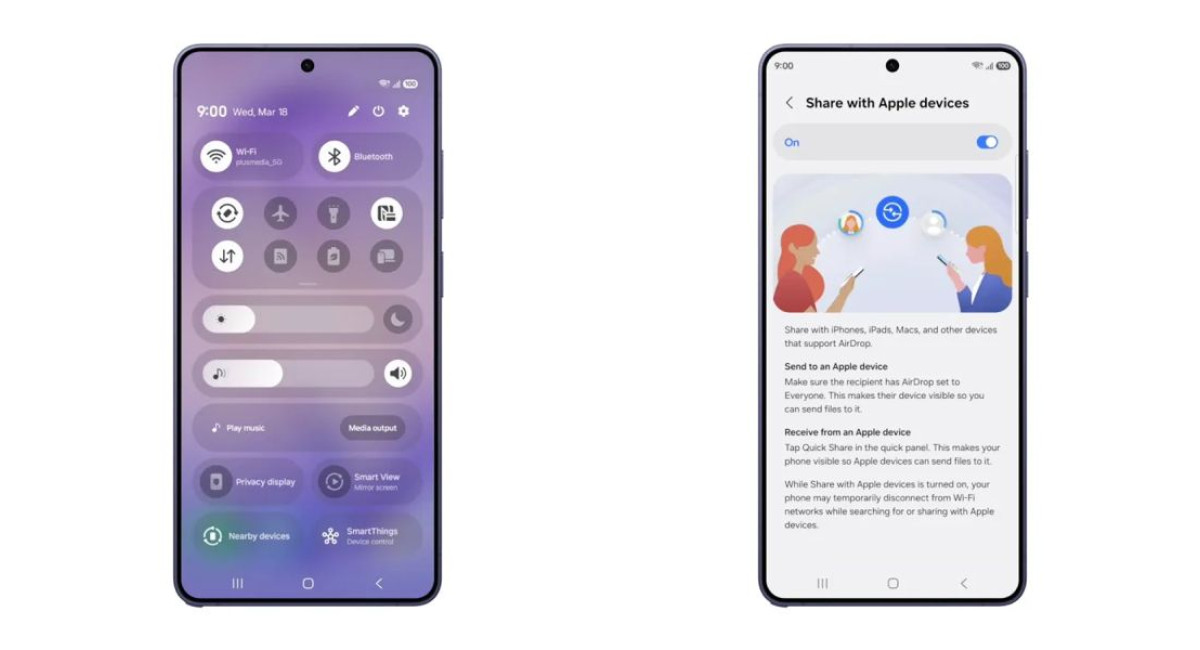
For over a decade, the mobile technology landscape has been defined by deeply entrenched ecosystems, creating invisible but heavily fortified walls between competing platforms. At the heart of this divide has been the everyday act of sharing files. While users within the same ecosystem enjoyed seamless, instantaneous transfers, moving a simple photo or video between an Apple device and an Android phone often felt like navigating an archaic technological maze. That era of frustration appears to be ending. In a monumental move for mobile interoperability, Samsung has announced that its new Galaxy S26 series will feature native AirDrop support directly integrated into its Quick Share platform, fundamentally changing how devices communicate across the aisle.
The announcement signals a massive shift in how the South Korean tech giant views user experience and platform boundaries. According to the official release, the capability to seamlessly beam files to and from Apple hardware is not a distant promise but an imminent reality. The feature is scheduled to begin rolling out to users on March 23, with the initial launch commencing in the domestic market of South Korea. Following this initial deployment, the update will rapidly expand to a wide array of international markets. Users in Europe, Hong Kong, Japan, Latin America, North America, Southeast Asia, and Taiwan will soon find their devices capable of this unprecedented cross-platform handshake.
To understand the magnitude of this development, one must look at the historical friction between mobile operating systems. Until now, attempting to share a high-resolution video or a batch of uncompressed photos from a Samsung device to an iPhone required inconvenient workarounds. Users were forced to rely on cloud storage links, messaging applications that heavily compressed the files, or third-party transfer services that demanded both parties to install the same software. This artificial barrier often served as a subtle tool for ecosystem lock-in, where the convenience of features like AirDrop convinced entire friend groups or professional teams to stick to a single brand. By integrating AirDrop compatibility into Quick Share, Samsung is effectively dismantling one of the most significant pain points for smartphone users worldwide.
From a practical standpoint, the integration is designed to be as frictionless as possible. The capability to share with Apple devices is reportedly enabled by default right out of the box for the Galaxy S26 series. This means users will not have to dig through complex settings menus or download additional plugins to make the feature work. Whether in a bustling coffee shop, a university lecture hall, or a corporate boardroom, a Galaxy S26 user can simply select a file,open the Quick Share menu, and likely see nearby iOS and macOS devices populate alongside fellow Android and Windows users. The seamless nature of this process represents a significant victory for consumer convenience over corporate rivalry.
While the exact technical specifications of how Quick Share interfaces with the proprietary AirDrop protocol remain under wraps, the achievement speaks volumes about the evolving nature of industry standards. It suggests a level of backend harmonization that tech enthusiasts have long hoped for. For years, the industry has slowly inched towards interoperability with universal charging standards like USB-C and cross-platform messaging protocols like RCS.Samsung taking the initiative to bridge the local file-sharing gap pushes this collaborative trend into new territory,potentially pressuring other manufacturers to adopt similar open-minded approaches to proprietary software features.
Looking ahead, this capability is not intended to be exclusive to Samsung's latest flagship lineup forever. The company has confirmed that while AirDrop support will debut on the Galaxy S26 series, plans are already in motion to expand this functionality to additional devices in the Samsung portfolio. Although specific models and timelines for this broader rollout have not yet been announced, the implication is clear. Samsung envisions a future where its entire ecosystem of smartphones, tablets, and laptops can freely converse with Apple hardware.
Ultimately, this strategic move repositions the Galaxy S26 series not just as a powerful flagship smartphone, but as a universal communicator. It appeals directly to consumers who live in mixed-device households or work in diverse professional environments. By removing the friction of file sharing, Samsung is betting that users will choose their devices based on hardware merits and software features rather than the fear of being isolated from their peers. It is a bold, consumer-friendly leap forward, promising a future where technology connects us rather than divides us based on the logo on the back of our phones.
MORE NEWS FOR YOU