 Help & Support
 SEARCH
Threads hands the reins to users in AI-powered shift
SHARE IT
In a digital landscape long dominated by opaque recommendation engines and passive scrolling, Meta is attempting to flip the script with its latest feature for Threads. Dubbed Dear Algo, this new tool introduces a novel way for users to influence what appears on their screens, moving away from silent clicks and hidden signals to explicit, natural language commands. The move represents a significant pivot in how social media platforms approach content curation, acknowledging a growing user fatigue with black-box algorithms that dictate the flow of information without transparency.
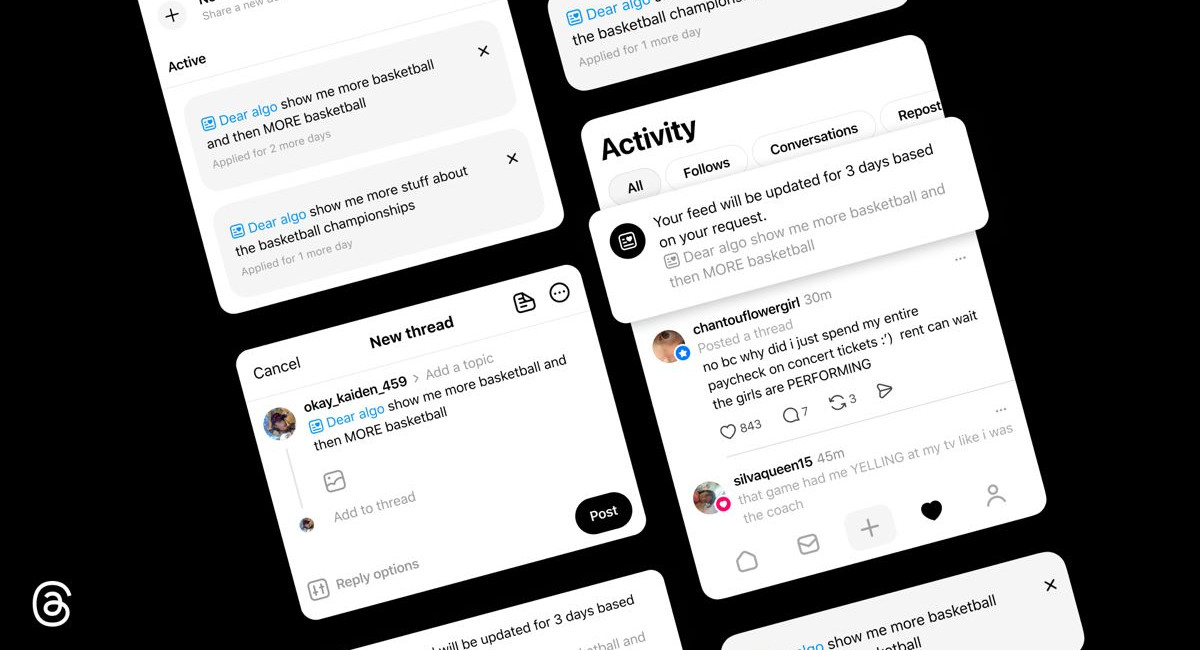
The mechanics of the feature are deceptively simple yet technically sophisticated. Instead of burying preferences deep within a settings menu or relying on the platform to guess a users interests based on dwell time and likes, Threads now invites users to draft a public post beginning with the phrase Dear Algo. Following this salutation, users can type out requests in plain English, specifying exactly what they want to see more of—or less of—in their feeds. Whether a user is hunting for more basketball highlights, seeking indie music recommendations, or trying to filter out political discourse for the weekend, the artificial intelligence behind the platform interprets these textual prompts and adjusts the feed accordingly.
This adjustment, however, is not a permanent resetting of the digital landscape. The changes triggered by a Dear Algo post are temporary, lasting for a specifically defined period, reported to be around three days. This temporal limitation suggests that Meta views human interest as fluid and changing, rather than a static profile to be solved once and forever. It allows users to curate their experience for the moment—perhaps turning their feed into a news ticker during a breaking event or a gallery of comfort content during a stressful week—without permanently skewing their long-term recommendations.
What makes this feature particularly intriguing is its public nature. By requiring these commands to be posted openly, Threads is gamifying the act of curation. It transforms the solitary act of algorithm management into a communal performance. Users can see what others are asking for, potentially inspiring new waves of trends or shared interests. This social signaling serves a dual purpose: it gives the AI clear, unambiguous data to work with, while simultaneously driving engagement by encouraging users to talk about the platform itself on the platform.
Industry analysts view this development as a strategic maneuver in the ongoing battle for dominance between Threads and its primary competitor, X. As mobile engagement becomes the key metric for success in 2026, platforms are under immense pressure to offer utility that goes beyond simple networking. By leveraging its massive investments in artificial intelligence infrastructure, Meta is trying to offer a level of responsiveness that older, more rigid algorithms cannot match. The ability to parse complex natural language queries and immediately reflect them in a content stream requires substantial backend power, justifying the billions of dollars the tech giant has poured into its data centers over the last few years.
However, the feature is not without its skeptics. Privacy advocates have raised questions about the necessity of making these requests public. For some, the idea of broadcasting their content preferences to the world is a deterrent, creating a barrier between them and the control they desire. There is also the risk of performative curation, where users might ask for high-brow intellectual content to signal sophistication to their followers, while privately craving entertainment. The algorithm, in this case, has to balance these explicit public commands with the implicit private behavior it tracks, potentially leading to a conflict between what users say they want and what they actually consume.
Despite these potential friction points, the introduction of Dear Algo marks a watershed moment in the relationship between humans and their digital feeds. It is an admission by a major tech power that the era of the all-knowing, paternalistic algorithm may be drawing to a close. Users are demanding agency, and the tools to provide that agency are finally catching up. Whether this specific feature becomes a staple of daily internet usage or fades into a novelty remains to be seen, but the precedent has been set. The wall between the user and the code is becoming permeable, allowing for a conversation where there was once only a broadcast.
MORE NEWS FOR YOU